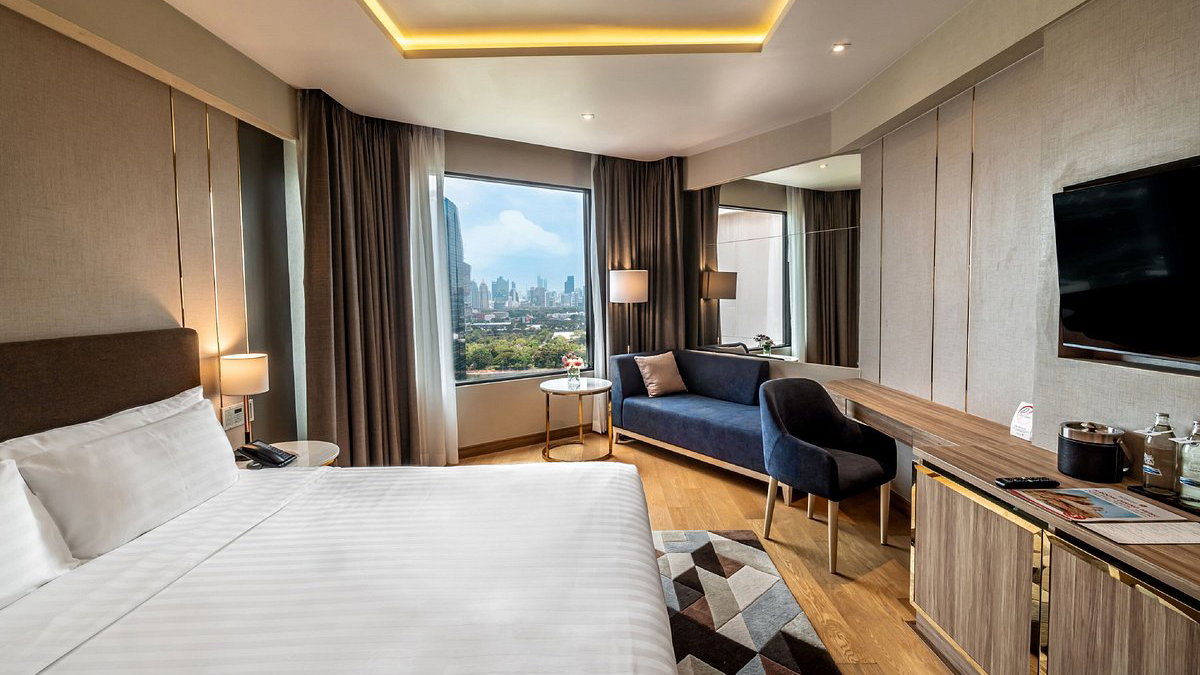
“Guest friendly” is a useful search phrase, but it is not a standard hotel policy. One traveler may use it to mean that a visitor can enter the lobby; another may mean that an additional adult can stay overnight without an extra charge. Those are different arrangements, and a short label does not settle either one.
The reliable approach is to ask the property about your actual reservation. This guide explains the questions that help you compare Bangkok hotels without relying on unsupported lists of guaranteed joiner fees or visitor access.
Separate visitors from registered guests
A daytime visitor, a person joining you for dinner and an additional overnight guest may be treated differently. Room occupancy rules also depend on the room category and the rate purchased. A room described as suitable for two adults does not automatically answer every question about someone arriving later.
Tell the property whether the person will visit briefly or stay overnight. Ask whether they must be added to the reservation and what identification or registration is required. Clear wording gives the hotel a better chance to provide an answer you can rely on.
If you are booking through an intermediary, check whether its guest information matches the hotel's requirements. A reservation confirmation and a message from the property are more useful than an anonymous comment describing someone else's stay.
Ask five questions before booking
Start with these points, adapting them to the arrangement you actually want:
- How many adults are included in this room category and rate?
- Are daytime visitors permitted, and are there visiting-hour restrictions?
- What is required for an additional adult staying overnight?
- What identification, registration or reception procedure applies?
- Are there extra charges, and what exactly triggers them?
Ask for the complete charge rather than only a yes-or-no answer about a “joiner fee.” An additional-person charge, breakfast supplement or room upgrade can affect the cost even if the hotel does not use that phrase. Confirm whether quoted amounts include applicable tax and service charges.
Keep the written answer with the reservation. If the response is unclear, follow up before choosing a non-refundable rate.
Choose a practical neighborhood
Nana and Asok can suit evenings around lower Sukhumvit, while Phrom Phong may fit restaurant and shopping plans farther along the corridor. Silom can be convenient for its dining and nightlife pockets. Ratchada or Huai Khwang may work when your plans are concentrated on that side of Bangkok.
Check the exact entrance and journey to your meeting point. A hotel deep inside a soi may need a car even though its marketing mentions a nearby BTS station. Look at the return after dinner or music as carefully as the outward trip.
Our Bangkok neighborhood guide compares these bases. Location helps with logistics; it does not prove that every hotel in the district applies the same visitor rules.
Use current property names
Older hotel roundups can remain visible long after a property changes name or closes. Dream Hotel Bangkok is now Night Hotel Bangkok; use the current hotel website when checking the location and making an inquiry. Do not assume an old travel review describes the present booking terms.
Narai Hotel should not remain on a list of currently bookable hotels. Its operator describes redevelopment in its portfolio information. A historic name, old booking page or photograph does not establish that rooms are available now.
Even at an operating hotel, ownership, management and policies can change. Check the property directly for your travel dates rather than carrying forward a fee guarantee from a previous year's article.
Compare the whole reservation cost
A low headline rate may come with conditions that do not suit your stay. Compare the included number of adults, breakfast, cancellation terms and any charges relevant to your intended visitor arrangement. If flexibility matters, a refundable rate may be worth considering before plans are fully confirmed.
Do not book for one person while assuming that a second adult can be added at no cost. Equally, do not assume that paying for two adults removes all registration requirements. Ask the property to explain the arrangement for your actual room and identify any remaining conditions.
Keep companion booking terms separate from the hotel reservation. The two purchases may have different cancellation policies, payment arrangements and responsibilities. Confirm each one through its own booking channel.
Make arrival straightforward
Use reception and access procedures as requested. A visitor may need to show identification or wait while registration is completed. Share the hotel's exact name, map pin and agreed meeting point so that someone arriving separately can find the correct entrance.
Do not promise access to a room, pool, lounge or other facility without confirmation. Permission to dine at a hotel restaurant is a separate matter from room or leisure-facility access. For example, U Jomtien's restaurant FAQ welcomes outside diners, but that statement does not establish access to other hotel facilities.
A public meeting in an approved lobby or restaurant can provide a comfortable start to the evening. Ask first if neither person is staying at the property.
Confirm again if the plan changes
If the visitor will now stay overnight, or the number of guests changes, contact the hotel rather than treating the earlier answer as permission for a different arrangement. The same applies if you change room category or booking dates.
Our first-time Bangkok guide can help with arrival and transport, while the Sukhumvit guide covers local evening logistics. A useful hotel choice combines clear policy, a workable location and terms you understand before paying.